The Importance of Seasonal Living
Many of us live as if every month should ask the same thing from us. The same pace, the same meals, the same routines, the same output. Nature does not work like that. Trees do not bloom all year. Animals do not ignore winter. The soil rests before it feeds new growth.
Our bodies are part of that same natural rhythm. When we start living with the seasons for better health and balance, we give ourselves permission to move with life rather than constantly pushing against it.
This is not about rigid rules or perfection. It is about listening more closely. Seasonal living can support energy, mood, digestion, creativity, rest and self-awareness. This article is for general wellbeing only and is not a substitute for medical advice.

The body is not separate from nature
Modern life often teaches us to override our natural signals. We drink more coffee when we are tired. We stay indoors when our body wants daylight. We keep saying yes when everything inside us asks for quiet.
Seasonal living offers another approach. It invites us to notice what the time of year is already teaching.
Spring inspires us with movement, growth and fresh starts. Summer offers expansion, warmth and outward energy. Autumn asks us to gather, sort and let go. Winter calls us inward for stillness and repair.
These patterns are easy to see outdoors, but they also show up in the body. Energy often rises with longer days and sunlight. Appetite may shift when the weather changes. We may crave lighter foods in heat and warmer, grounding meals in cold months.
Honouring these changes helps build a stronger mind-body connection. Instead of treating the body like a machine, we begin to treat it like a living system.
Seasonal food helps the body feel supported
Eating with the seasons is one of the most practical ways to begin. Seasonal produce is often fresher, more flavourful and better suited to the meals we naturally want at that time of year.
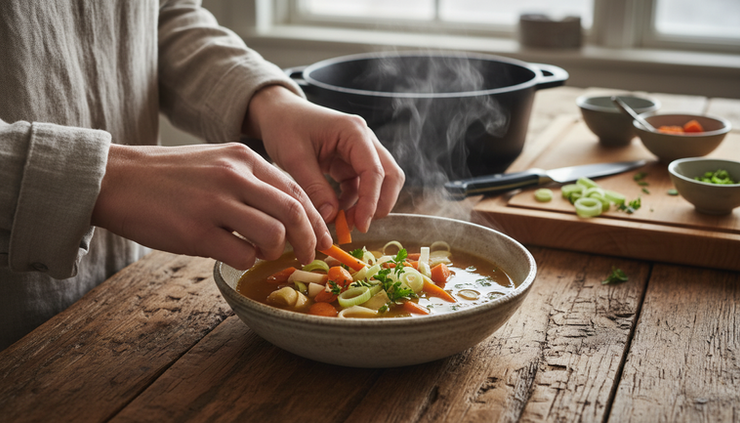
In spring, tender greens, herbs and lighter dishes can feel cleansing after winter. In summer, berries, cucumbers, tomatoes and salads bring freshness and hydration. Autumn gives us apples, pears, root vegetables and squashes, perfect for steady, nourishing meals. Winter suits soups, stews, brassicas, oats, warming spices and slow-cooked foods.
This does not mean every plate must be local or perfectly seasonal. It simply means paying attention.
The aim is not restriction. The aim is alignment. Seasonal eating helps us take cues from the world around us, just as our ancestors did.
Summer carries Yang energy for creativity and expression
In many Eastern traditions, the idea of Yin and Yang describes two different but connected energies. Yang is active, bright, warm and outward. It is linked with summer, sunlight, movement and expression.
This makes summer a beautiful time to use energy in creative ways. Longer days can support projects, social connection, travel, play, gardening, music, writing, making art or spending more time outdoors.
Summer often asks us to open. To say yes to life. To let ideas move through the body instead of keeping them stuck in the mind.
Yet Yang energy can become too much when we keep pushing. Full calendars, late nights, constant stimulation and pressure to make the most of every sunny day can leave us tired and wired.
When summer energy has somewhere meaningful to go, it becomes less frantic. Creativity becomes nourishment rather than another demand.
Winter brings Yin energy and the need for deep rest
Yin is quiet, cool, slow and inward. It is linked with winter, darkness, reflection and restoration. In nature, winter is not empty. It is a hidden season of repair.
Seeds rest in the soil. Trees draw energy inward. Many animals slow down. The whole natural world teaches us that rest is not laziness. It is preparation.
Humans often forget this. We expect the same productivity in January as we do in June. We feel guilty for needing more sleep, more warmth or more space. Yet winter can be a powerful time to recover from the output of the year.
Too much rest without movement can leave us feeling heavy or lethargic. Too much activity without rest can lead to burnout. Wellbeing needs both Yin and Yang. The skill is learning which one the body needs now.

The equinox is a natural time to check in
The equinox arrives twice a year, in spring and autumn, when day and night are almost equal. This balance makes it a powerful moment to pause and reflect.
Rather than rushing from one season into the next, the equinox invites a check-in. It is a threshold. A gentle turning point.
These moments help us develop trust in the body. Over time, we begin to notice patterns. Perhaps we always overcommit in summer. Perhaps autumn brings a need to declutter. Perhaps winter asks for more solitude than we usually allow.
This awareness is the heart of seasonal living.
Seasonal wellbeing events can help you reconnect
Our ancestors lived much closer to the land. Their food, work, rituals and rest were shaped by light, weather, harvest and community. While modern life looks very different, the need for seasonal rhythm has not disappeared.
Wellbeing seasonal events and workshops can offer a supportive way to return to that rhythm. They create space to pause, reflect and reconnect with the body in line with nature.
These gatherings can help mark the year with intention. Instead of letting seasons pass unnoticed, each one becomes a chance to ask, “How am I, really?”

A simple way to begin this season
You do not need to change your whole life to live more seasonally. Start with one small practice.
Choose seasonal produce on your next shop. Take a walk and notice what is changing outside. Adjust your bedtime as the light shifts. Begin a short equinox reflection. Let summer inspire one creative act. Let winter protect one pocket of deep rest.
The more we honour the seasons, the more we learn to honour ourselves. Nature moves through growth, fullness, release and rest. So do we.
Better balance begins when we stop expecting the body to live outside the cycles that created it.
Keep an eye out for our seasonal events, if you would like to learn more.


Comments